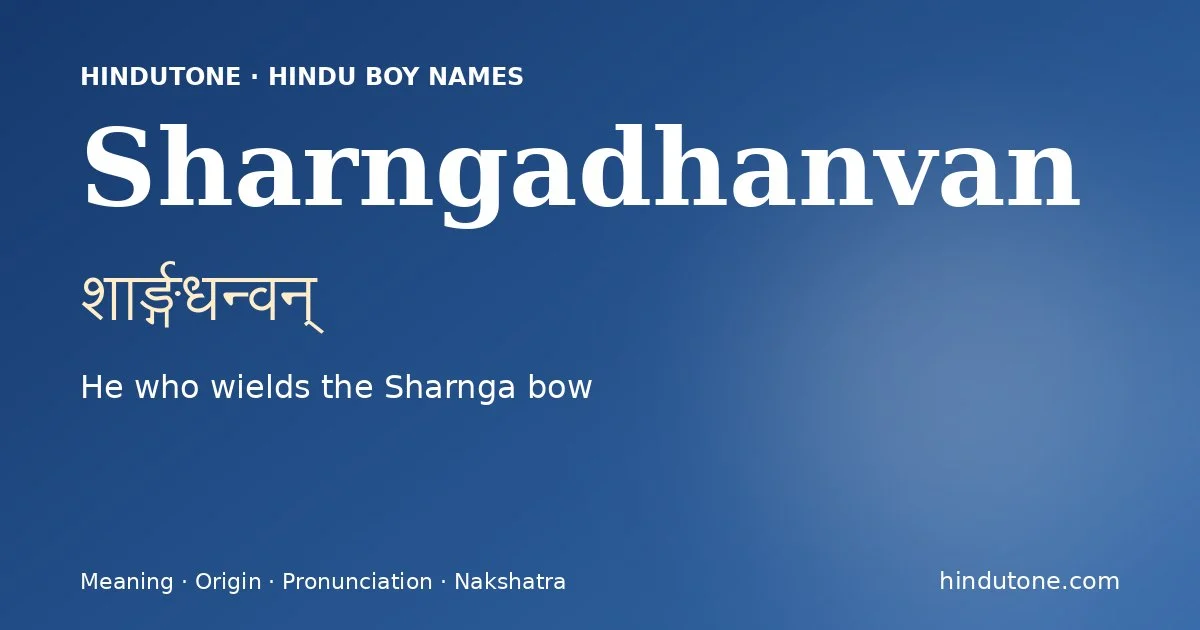
शार्ङ्गधन्वन् — संस्कृत मूल का हिंदू बालक नाम, अर्थ "जो शार्ङ्ग धनुष धारण करते हैं".
शार्ङ्गधन्वन् का अर्थ क्या है?
"शार्ङ्गधन्वन्" संस्कृत मूल का हिंदू बालक नाम है। अर्थ: जो शार्ङ्ग धनुष धारण करते हैं।
उत्पत्ति व संस्कृत लिपि
संस्कृत: शार्ङ्गधन्वन्। हिंदी: शार्ङ्गधन्वन्।
शार्ङ्गधन्वन् का उच्चारण
शार्ङ्गधन्वन् · Sharngadhanvan
माता-पिता शार्ङ्गधन्वन् नाम क्यों चुनते हैं
जो शार्ङ्ग धनुष धारण करते हैं — शुभ अर्थ।
कालातीत, संस्कृत मूल का हिंदू नाम।
शार्ङ्गधन्वन् — नाम तथ्य
- अर्थ
- जो शार्ङ्ग धनुष धारण करते हैं
- लिंग
- हिंदू लड़के का नाम
- नक्षत्र
- हस्त
- राशि
- कन्या (Kanya)
- अंक ज्योतिष
- 2
अक्सर पूछे जाने वाले प्रश्न
शार्ङ्गधन्वन् नाम का अर्थ क्या है?
शार्ङ्गधन्वन् संस्कृत मूल का हिंदू लड़के का नाम है, जिसका अर्थ है “जो शार्ङ्ग धनुष धारण करते हैं”।
शार्ङ्गधन्वन् लड़के का नाम है या लड़की का?
शार्ङ्गधन्वन् पारंपरिक रूप से हिंदू लड़के का नाम है।
शार्ङ्गधन्वन् नाम किस नक्षत्र और राशि के लिए उपयुक्त है?
वैदिक नामकरण के प्रथम-अक्षर नियम के अनुसार शार्ङ्गधन्वन् नाम हस्त नक्षत्र और कन्या (Kanya) राशि से मेल खाता है।
शार्ङ्गधन्वन् नाम का अंक (न्यूमरोलॉजी) क्या है?
काल्डियन अंक ज्योतिष के अनुसार शार्ङ्गधन्वन् नाम का अंक 2 है।
Explore more: Hasta nakshatra names · Kanya rashi names · Hindu boy names with S · All Hindu names A–Z